
Meta Description: Dive deep into the chemistry that makes glass the safest food storage material. Learn about molecular structure and why glass doesn't react with food.
When scientists say glass is "chemically inert," what does that actually mean? Understanding the molecular structure of glass explains why glass food storage containers are the safest choice for food contact and why they outperform plastic and even some metals.
The Basic Structure
Glass is made primarily from silica (silicon dioxide), the same material found in sand. When melted at extreme temperatures and cooled rapidly, silica forms an amorphous (non-crystalline) solid structure. Unlike crystalline materials with ordered atomic arrangements, glass has a random, disordered structure .
Why Randomness Matters
This disordered structure creates a material with no grain boundaries or weak points where chemical reactions typically initiate. The silicon and oxygen atoms form strong covalent bonds that resist breaking. Food molecules cannot easily penetrate or react with this stable network.
No Free Ions
Some materials release ions when in contact with acidic foods. Metal containers can leach metallic ions. Lower-quality ceramics may release lead or cadmium from glazes. Glass, particularly borosilicate glass, has all its atoms tightly bound in the silicate network, with minimal free ions available to leach .
The Borosilicate Advantage
Borosilicate glass contains boron trioxide, which creates a fully polymerized silicate network with no non-bridging oxygen atoms . This means every oxygen atom is bonded to two silicon or boron atoms, creating an exceptionally stable structure. This explains why borosilicate glass resists thermal shock and chemical attack.
Temperature Stability
Chemical reactions generally accelerate with heat. Many materials that are stable at room temperature become reactive when heated. Glass maintains its inert nature across its entire temperature range—from freezer to oven. The silicate network remains stable whether at -20°C or 400°C .
Acid Resistance
Acidic foods—tomatoes, citrus, vinegar—pose particular challenges for storage containers. Acids can dissolve some materials or trigger ion exchange. Glass's silicate network resists acid attack. Even long-term exposure to acidic foods causes minimal alteration compared to other materials .
No Absorption
Porous materials absorb food molecules, leading to flavor transfer and bacterial growth. Glass's non-porous surface has no spaces for molecules to penetrate . Food simply sits on the surface, then washes completely away.
Scratch Resistance
While glass can scratch, it's much harder than plastic. This hardness means scratches are less likely, and when they do occur, they don't create the deep grooves that harbor bacteria in plastic. The smooth surface remains hygienic .
UV Protection
Some glass food storage containers feature琥珀色玻璃 that provides additional protection.琥珀色 blocks certain light wavelengths that can accelerate food degradation and vitamin loss . This chemical stability extends to protecting the food itself.
Testing and Certification
Reputable manufacturers verify their glass chemistry through independent testing. Certifications like FDA compliance, LFGB (European food safety), and SGS indicate that glass composition has been tested and confirmed safe for food contact .
The Bottom Line
Glass's chemical inertness isn't marketing—it's fundamental materials science. The stable silicate network resists reaction with food, doesn't leach chemicals, and maintains integrity across temperature extremes. When you choose glass food storage containers, you're choosing materials science proven safe over centuries.
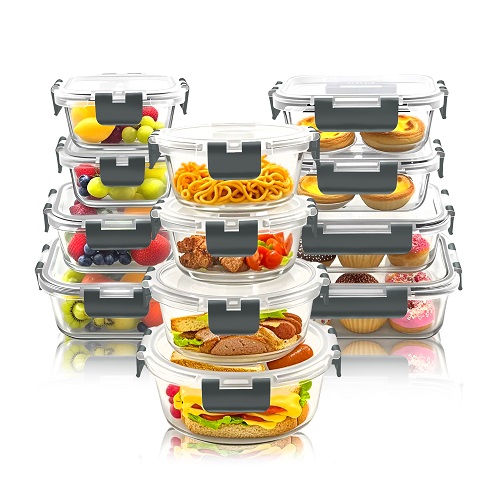 Glass Food Storage
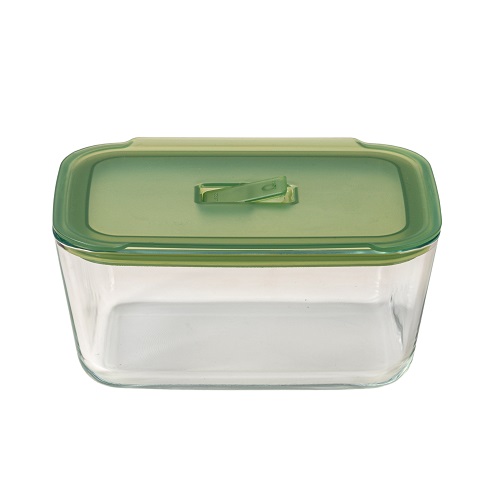 Vacuum Food Storage
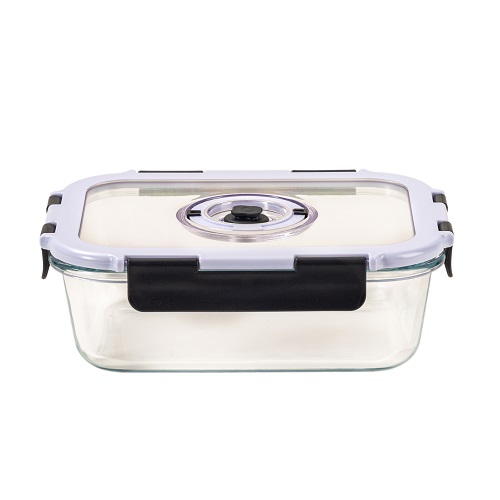 Vacuum Food Storage with Pump
 October 11,2026
 October 11,2026
 October 07,2026
Copyright ©2025 All Rights Reserved by Jiangsu Besfull Technology Co., Ltd.